
About CSEF

The Civil Society Education Fund (CSEF) has paved the way for civil society to become a credible and influential partner in education sector dialogue through its work with National Education Coalitions that represent local civil society organisations within a country. The aim of CSEF is to ensure that civil society organisations can assume the roles that they are expected to play according to the Dakar Framework for Action and specifically in respect of GPE country level processes.
CSEF was set up by the Global Campaign for Education in 2009 to support the core work of National Education Coalitions so that civil society can fully engage with and track the progress of national governments and donor groups in working towards the EFA goals. Initially funded through the Fast Track Initiative (now Global Partnership for Education - GPE) and currently by the Australian Government, CSEF demonstrates how GPE and the international donor community values civil society as a cornerstone in education sector processes. Since its initiation CSEF has supported 45 National Education Coalitions across Africa, Asia and the Pacific and Latin America, which play an active role in campaigning, advocating and engaging with governments and donors, working towards quality education for all citizens, including those who are excluded and vulnerable.
CSEF is coordinated through regional agencies that provide programmatic support to coalitions: ANCEFA in Africa, CLADE in Latin America and ASPBAE in Asia and the Pacific.
The Civil Society Education Fund includes the following objectives:
- Establishing broad based and democratically run national education coalitions
- Strengthening the capacity of national education coalitions to engage with and track the progress of national governments and local donor groups, and advocate for policy change and institutional reforms at country level.
Examples of how CSEF makes it work
Engagement in education sector planning and policy developmentIn Ghana, the National Education Coalition (GNECC) facilitates, an annual civil society review of the education sector, ensuring inputs from a broad range of civil society organisations at national and local levels. Through these processes GNECC has been able to promote numerous policy demands, which have later been adopted by the government. For example, the coalition inspired a process to develop a comprehensive policy on education for women and girls, with specific provisions on the re-entry of girls who drop out of school due to early pregnancies and other causes.
Influencing national education lawsIn Kenya, the Elimu Yetu Coalition (EYC) initiated a process to fast track the revision of the Education Act of 1968 and other current policies, and spearheaded the development of a draft National Education Policy and a new Education Act. The coalition represents civil society in the national review process, led by a Committee of Experts appointed by the government.
In Bolivia, the National Education Coalition (CBDE) influenced the review, adjustment and enactment of the “Avelino Siñani – Alizardo Pérez (ASEP)” Education Law. A national mobilisation campaign was used to generate policy proposals presented by civil society groups to strengthen the ASEP Education Bill, with seminars and round tables being held at different stages in the process.
Budget workIn Malawi, the Civil Society Education Coalition (CSEC) operates through District Education Networks, whose key task is to support school budget monitoring processes conducted by school and community-based groups – exposing mismanagement and advising on better allocation and use of resources. Also, after campaigning for several years, CSEC helped influence the government to place education as a top priority in the revised Malawi Growth and Development Strategy. Through continued public pressure the coalition contributed to an increase in the national budget allocated to education, from 15.7% in 2009 to 21% in the 2010/11 financial year.
Research and evidence-gatheringLast year, the Coalition for Education Solomon Islands (COESI) launched the Isabel and Renbel Education and Literacy Survey, displaying the lowest literacy rates in the country. For instance, findings from the Isabel province show that only 45.2% of the children who complete secondary school are actually able to read or write. The report, which was presented during the 2011 Annual Joint Review of the National Education Action Plan, revealed serious education challenges and demanded from the Ministry of Education to prioritise literacy and put appropriate policies in place.

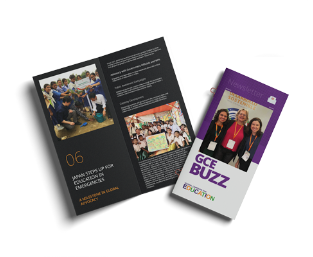
We have produced an introductory leaflet about the Civil Society Education Fund, including a brief overview of the impact made by coalitions across the network.
CSEF Progress Reports
Every six months each of the national education coalitions reports back on its progress. You can view these reports
here:
CSEF BulletinsGCE shares news from across the CSEF coalitions through its regular email bulletin. View the archive of bulletins
here: